
RESIDENTIAL / CIVIL / SUBDIVISION
Bower Avenue Residential Development
A complex residential infill development on poor ground with shallow groundwater, delivered from post-consent design coordination through to civil works completion — avoiding full dewatering, cutting remediation costs from $300,000 to $30,000 and finishing five weeks ahead of programme.
Location: 82 Bower Avenue, New Brighton, Christchurch
Client: Sunshine Housing Limited
Expertise: Lead consultant – Project management – Early contractor involvement – Procurement and construction-phase delivery
Project Status: Civil works complete
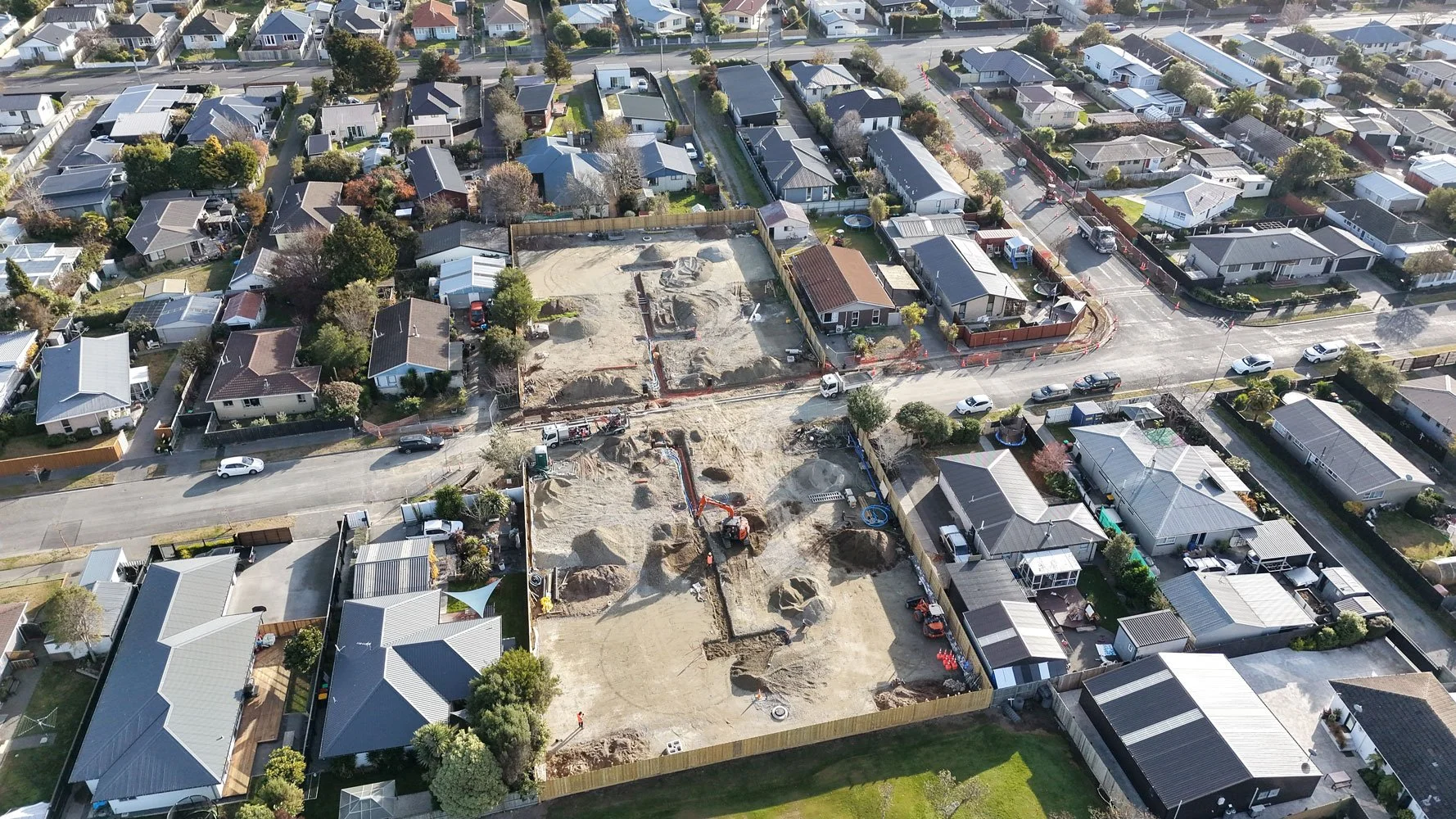
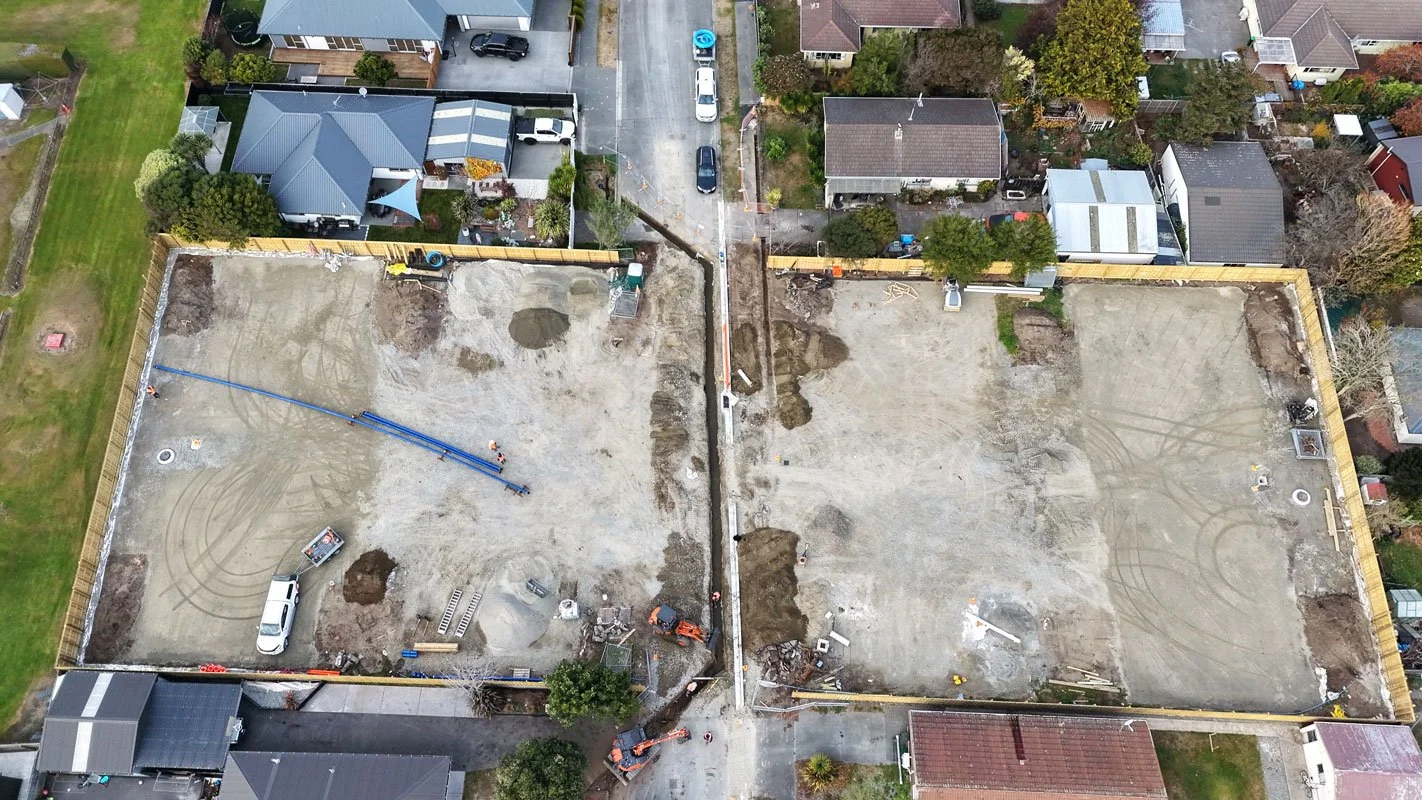
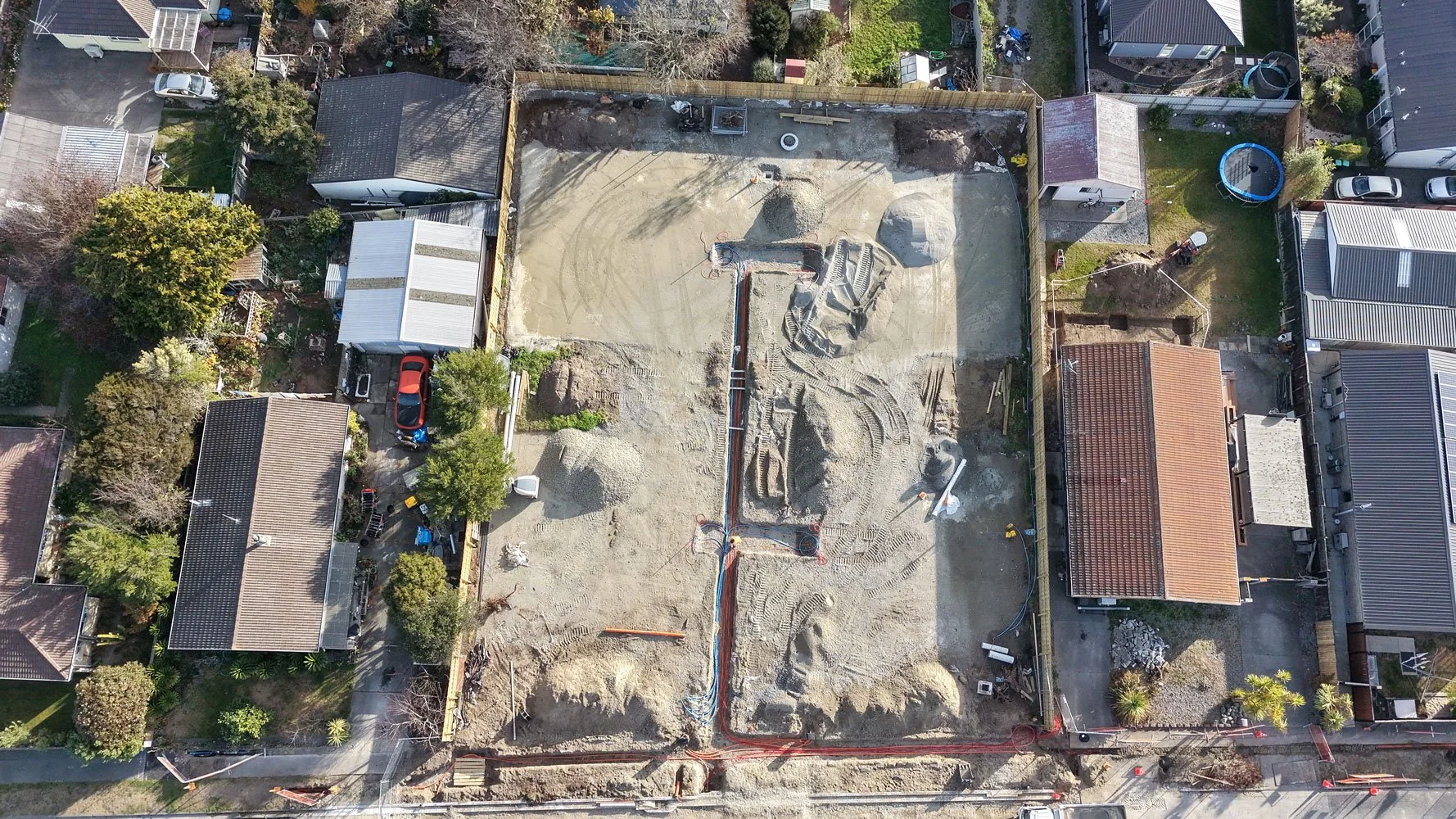
16 residential units across 8 building blocks in New Brighton, Christchurch. The 3,500m² site presented significant ground condition, groundwater, contamination, and residential interface challenges.
Cadeo was engaged after building and resource consent had been granted to lead post-consent design coordination and construction delivery. Our role covered design review, early contractor involvement, procurement, cost planning, construction-phase project management, compliance management, and client representation.
Project Challenges
The consented design still carried significant construction risk, and the challenge was to improve buildability within an already-approved framework — with any changes needing to be practical, compliant, and accepted by the relevant engineers and local authorities.
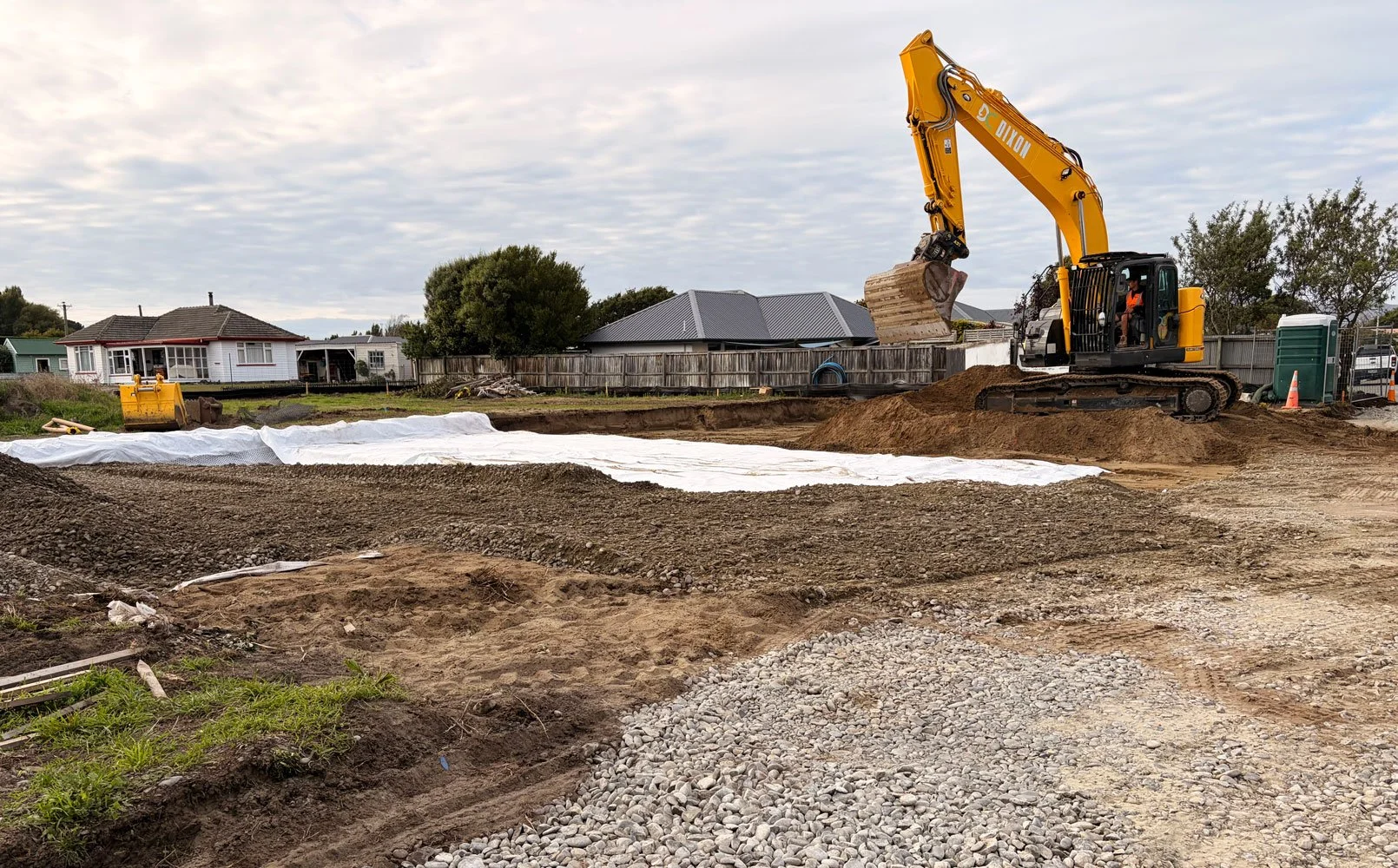
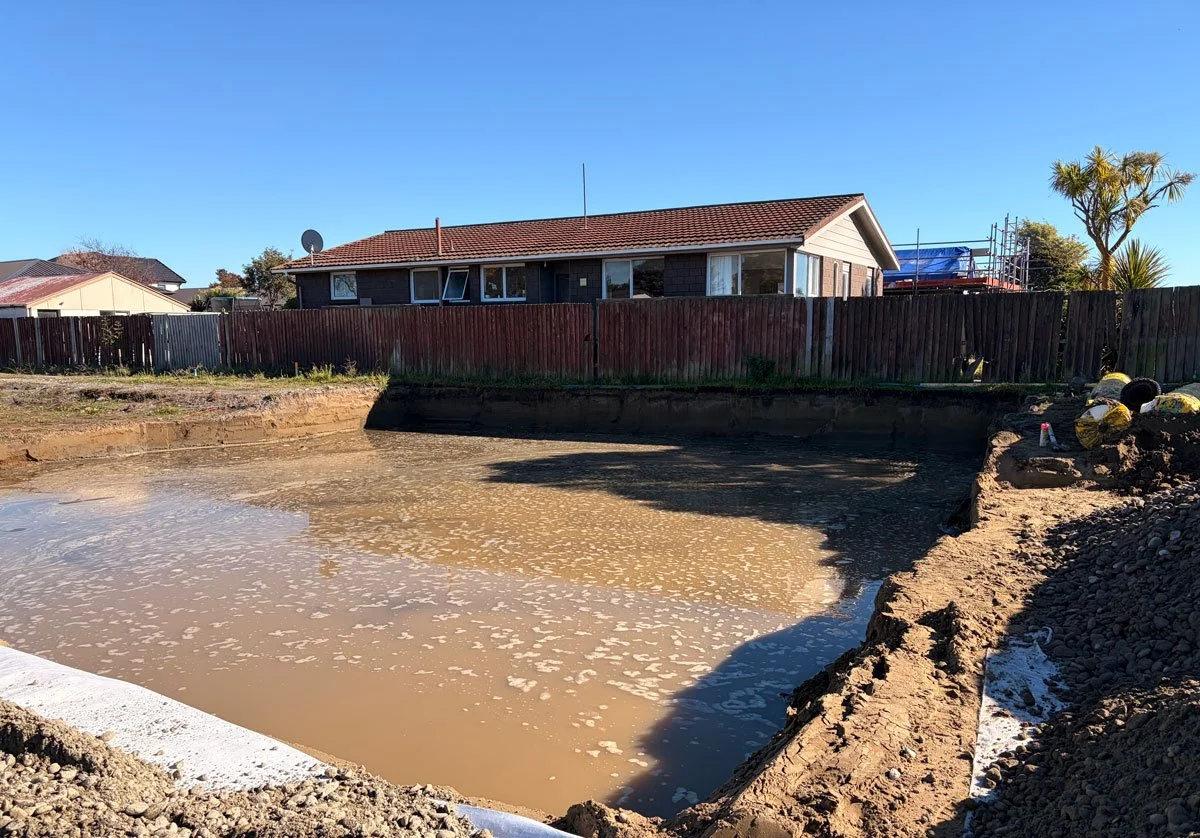
The most immediate risk was groundwater. With the water table at approximately 900 mm below ground level and most foundations requiring excavation to 1,200 mm, a large portion of the work risked intersecting groundwater — potentially triggering full dewatering, chemically treated water management, additional pipeline support, and further ECan requirements.
Contamination was a second risk. The site had asbestos and heavy metal contamination, but the original information was too broad to support cost-effective remediation — leaving the client exposed to worst-case disposal costs across the whole site.
Our Approach
Design review and groundwater management
The site had asbestos and heavy metal contamination, but the original information was too broad to support cost-effective remediation. Targeted investigation allowed materials to be properly classified and directed to appropriate disposal facilities — reducing disposal volume from approximately 300 m³ to around 50 m³ and anticipated remediation cost from approximately $300,000 to approximately $30,000.
Contamination and remediation planning
The original contamination information was too broad to support cost-effective remediation. We engaged the right technical specialists to properly define the hotspots through targeted investigation, allowing materials to be separated by contamination category and directed to appropriate disposal facilities.
Procurement and cost planning
We developed a first-principles cost estimate based on the revised methodology and site risks, then worked with small-to-medium civil contractors with hands-on ownership and lower overheads.
Risk and issue management
With almost two decades of Canterbury civil construction experience, we understood the ground conditions, the compliance requirements, and how construction decisions affect cost and programme to manage risks.
That depth of knowledge allowed us to go beyond contract administration and address root causes — whether groundwater, service clashes, constructability, or compliance — keeping the works moving without unnecessary redesign cycles or delay.
Neighbour and stakeholder management
During construction, one resident raised concerns about vibration from larger machinery. We worked with the contractor to adjust the approach, including using a smaller machine where practical, without additional cost to the client.
Project Outcomes
Full dewatering avoided despite groundwater at approximately 900 mm below ground level
Drainage pipe levels raised by an average of 200 mm, reducing excavation risk across the site
Approximately $40,000 saved through simplified groundwater management
Around two and a half weeks of programme time saved through design and methodology changes
Contaminated material disposal reduced from approximately 300 m³ to around 50 m³
Remediation cost reduced from approximately $300,000 to approximately $30,000
Construction-phase design changes properly recorded and accepted by council engineers
Civil works completed within budget, five weeks ahead of the agreed practical completion date
No safety incidents during construction